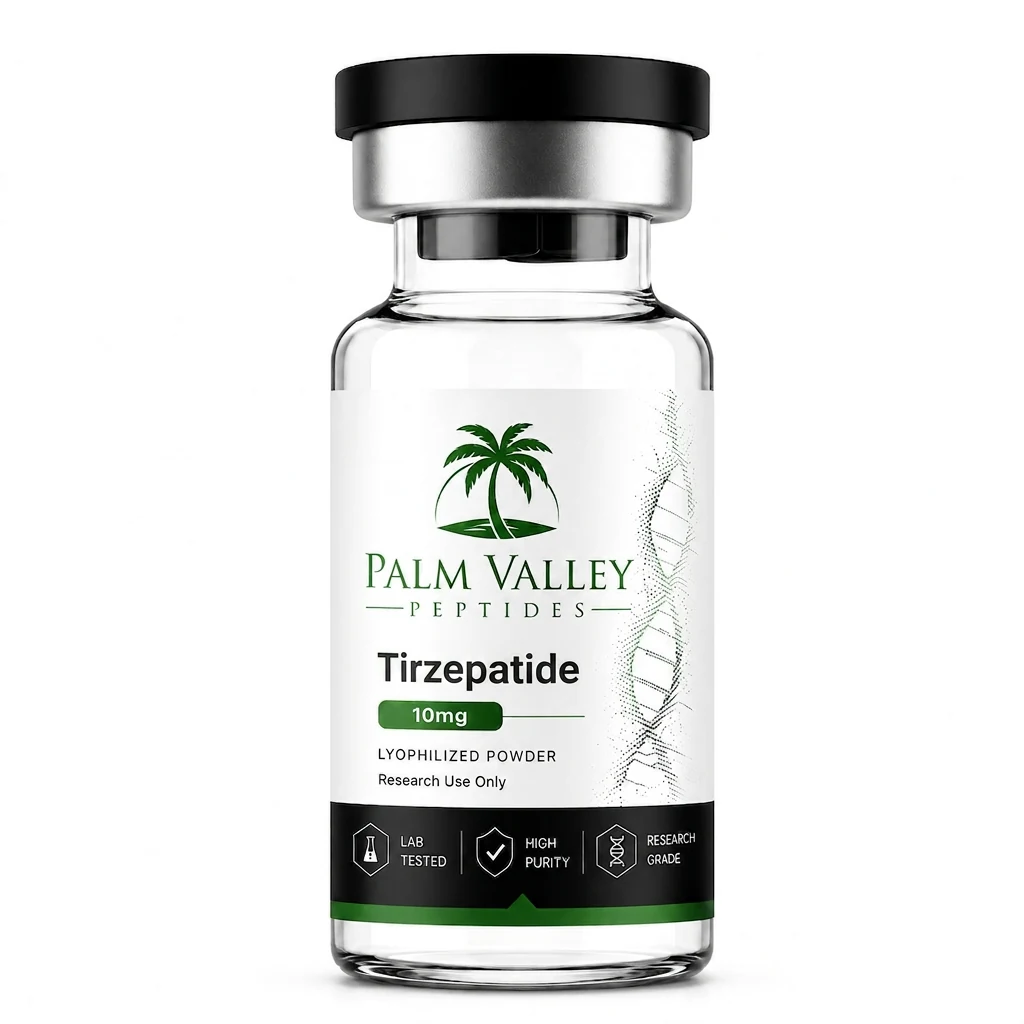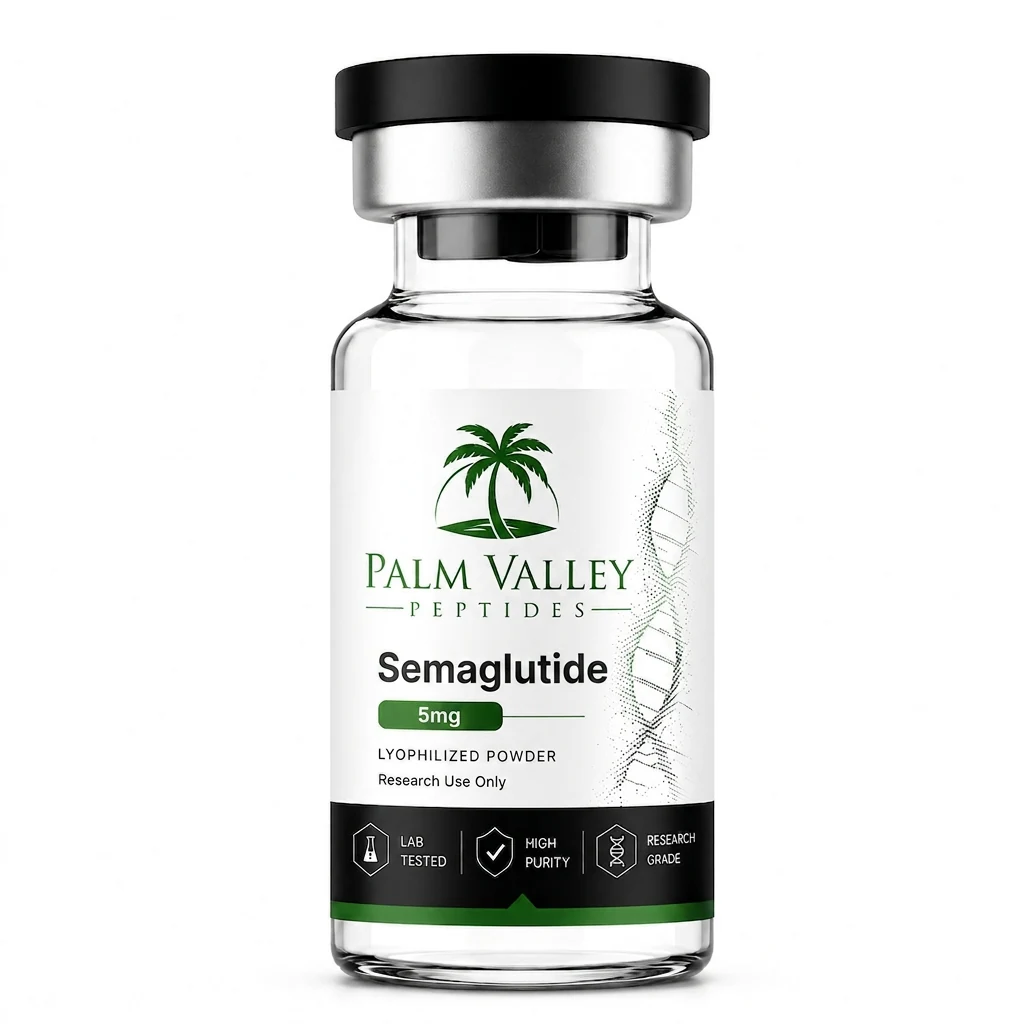
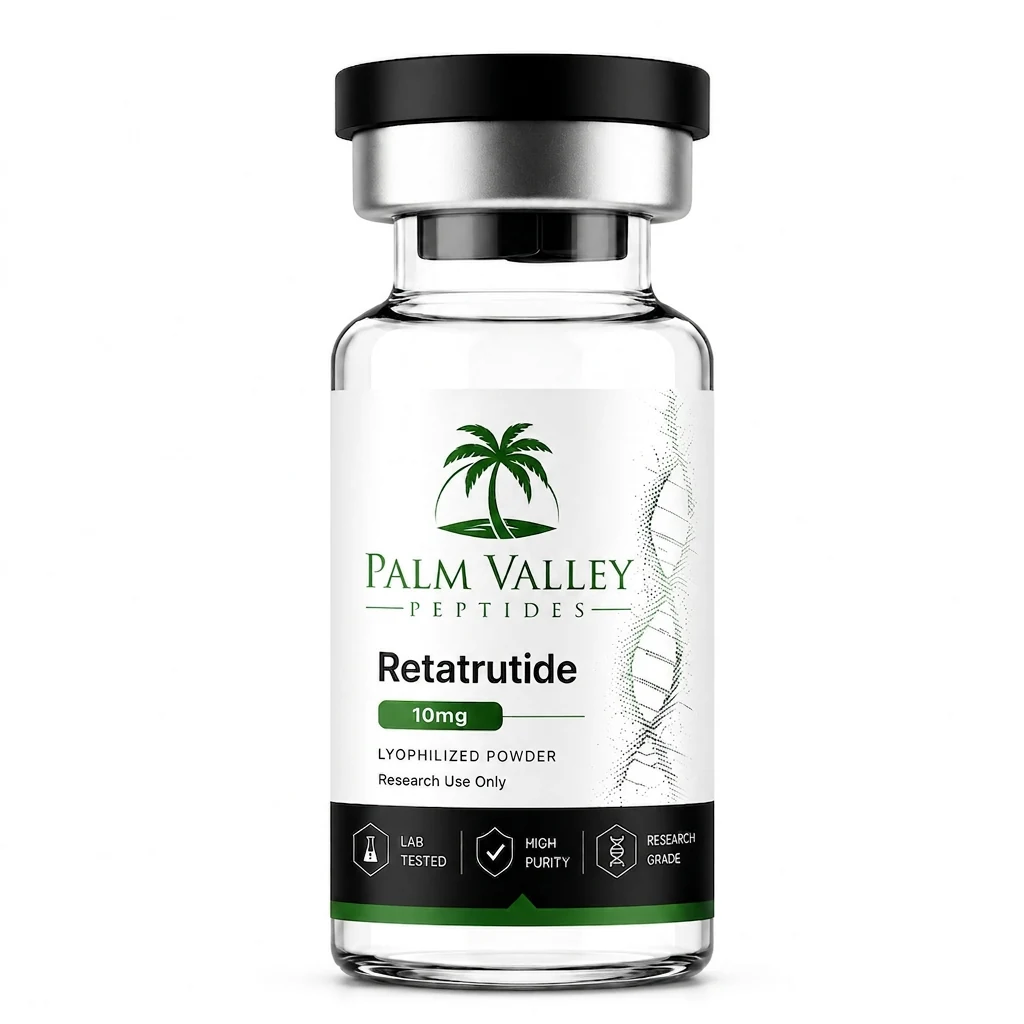
Retatrutide is the most requested research peptide in our catalog. Here is how the triple-agonist mechanism is described in published literature, plus the handling and documentation standards we apply to every lot.
Retatrutide (LY3437943) is a synthetic single-chain peptide engineered to engage three incretin-family receptors — GLP-1, GIP and glucagon. That triple-agonist design is what separates it from dual-agonist compounds and is the reason it dominates current metabolic research interest in American laboratories.
Mechanism as described in the literature
- GLP-1 receptor agonism — the most extensively characterized incretin pathway in published in-vitro work.
- GIP receptor agonism — a complementary incretin axis studied alongside GLP-1 in receptor-binding assays.
- Glucagon receptor agonism — the differentiating third arm, associated with energy-expenditure endpoints in animal-model literature.
Because all three activities sit on a single molecule, receptor-selectivity assays are the usual first checkpoint in a research workflow. Confirm which receptor panel your protocol requires before selecting a batch.
Available research formats
| Format | Presentation | Typical use |
|---|---|---|
| 5 mg | Lyophilized powder | Pilot runs, small assay panels |
| 10 mg | Lyophilized powder | Standard laboratory workflows |
| 15 mg / 20 mg | Lyophilized powder | Extended or multi-arm study designs |
Handling and reconstitution
- Store lyophilized vials at -4°F to 46°F (-20°C to 8°C), protected from light.
- Reconstitute with bacteriostatic water; add solvent slowly down the vial wall, never directly onto the pellet.
- Do not shake — swirl gently until fully dissolved.
- Once reconstituted, keep refrigerated and record the reconstitution date on the vial.
- Log the batch/lot number against the matching COA before any assay work begins.
Documentation checkpoints
- Match the vial's lot number to the COA before opening.
- Confirm HPLC purity and the analytical method noted on the certificate.
- Check mass-spec identity confirmation against the expected molecular weight.
- File the COA with your internal batch record alongside storage conditions.
Every Palm Valley Peptides lot ships from the USA with same-day dispatch on cleared orders, HPLC-MS purity documentation, and a batch-matched certificate of analysis.
What purity should a retatrutide research lot show?
Our lots are released at ≥99% HPLC purity with mass-spec identity confirmation on the batch COA.
Which vial size should a new workflow start with?
Most labs validate their assay on the 5 mg vial before scaling to 10 mg or larger formats.
How is it shipped?
Lyophilized, temperature-protected, same-day dispatch from the USA on cleared orders.