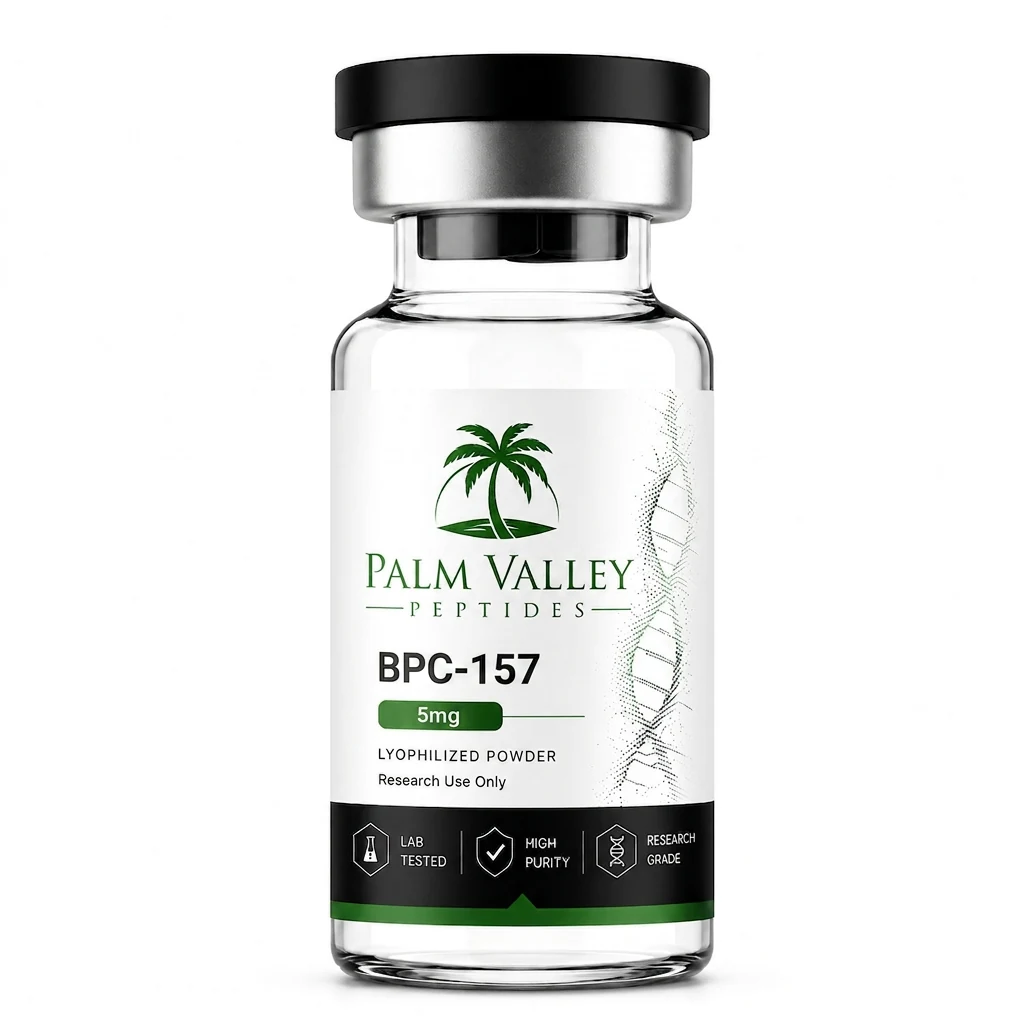
BPC-157 is the most-ordered tissue-research peptide in the catalog. This profile covers structure, stability behaviour and how to handle each vial format.
BPC-157 is a synthetic pentadecapeptide (15 amino acids) derived from a partial sequence of human gastric juice protein BPC. It is one of the most frequently cited peptides in published in-vitro tissue-research literature.
Stability characteristics
- Notably stable in aqueous solution relative to many short peptides.
- Lyophilized powder remains the preferred long-term storage form.
- Light exposure and freeze-thaw cycling are the two most common degradation sources in practice.
Formats stocked
| Format | Notes |
|---|---|
| 5 mg | Entry format for assay validation |
| 10 mg | Most common laboratory format |
| 20 mg | Extended study designs |
Handling
- Store lyophilized vials at -4°F to 46°F (-20°C to 8°C), protected from light.
- Reconstitute with bacteriostatic water; add solvent slowly down the vial wall, never directly onto the pellet.
- Do not shake — swirl gently until fully dissolved.
- Once reconstituted, keep refrigerated and record the reconstitution date on the vial.
- Log the batch/lot number against the matching COA before any assay work begins.
Every Palm Valley Peptides lot ships from the USA with same-day dispatch on cleared orders, HPLC-MS purity documentation, and a batch-matched certificate of analysis.
Does BPC-157 need to be kept frozen after reconstitution?
Refrigeration is standard; avoid repeated freeze-thaw cycles, which are the main practical stability risk.
Is a COA supplied?
Yes — every lot ships with a batch-matched HPLC-MS certificate of analysis.
Research use only. Palm Valley Peptides supplies materials strictly for in vitro and laboratory research. Nothing in this article constitutes medical, therapeutic, or dosage advice for human or animal use.